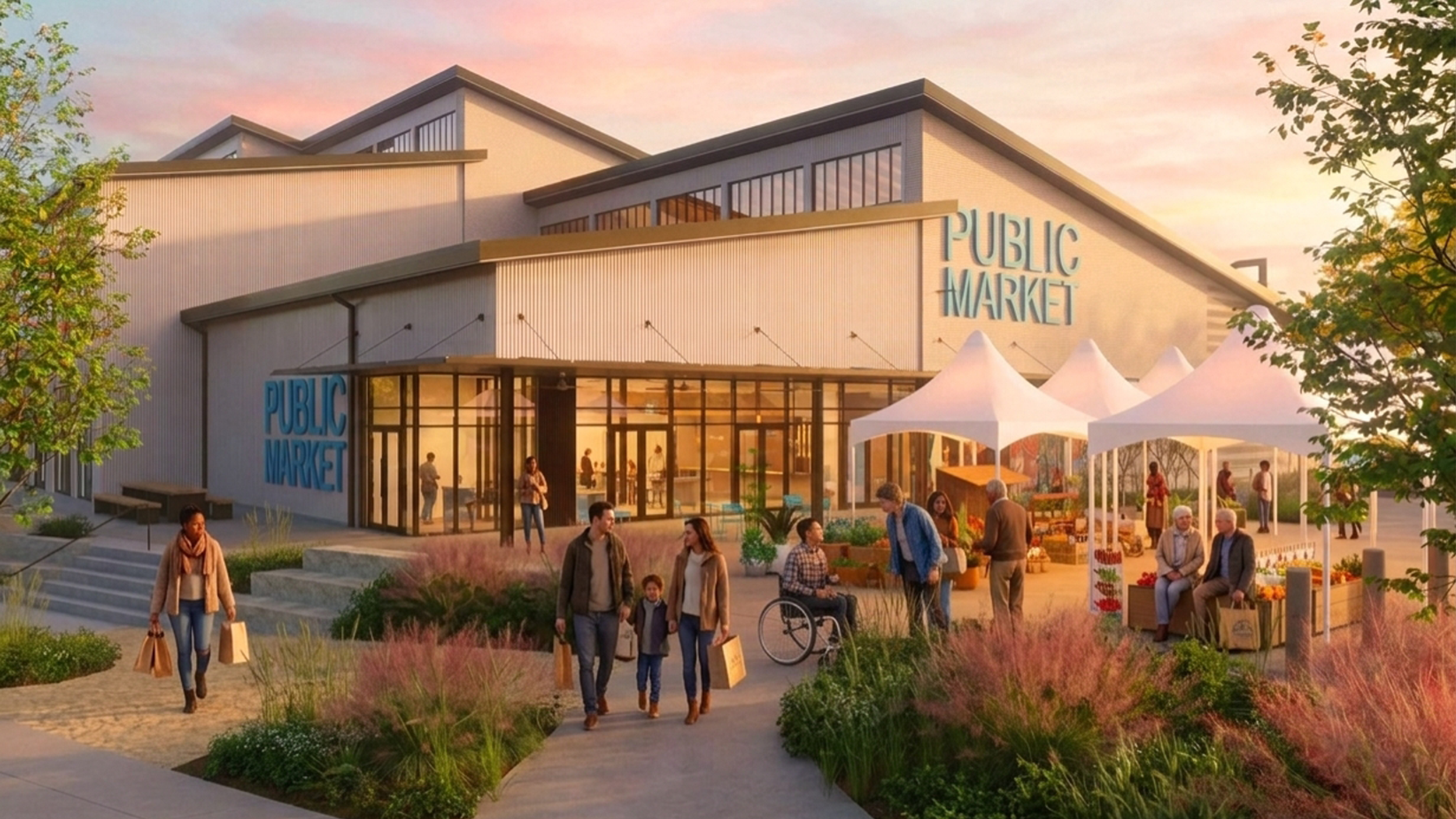
Work has started on a year-round, indoor, nonprofit public market at 8th and Farnam streets in downtown Omaha.
The market will provide a vibrant destination for people to gather while shopping from local small businesses selling a variety of fresh, prepared, and specialty foods as well as locally-made goods.
Heritage Omaha, a nonprofit that develops philanthropic projects that enrich the Omaha community, is leading the project, raising the private donations needed to build and support the market, as well as overseeing construction.
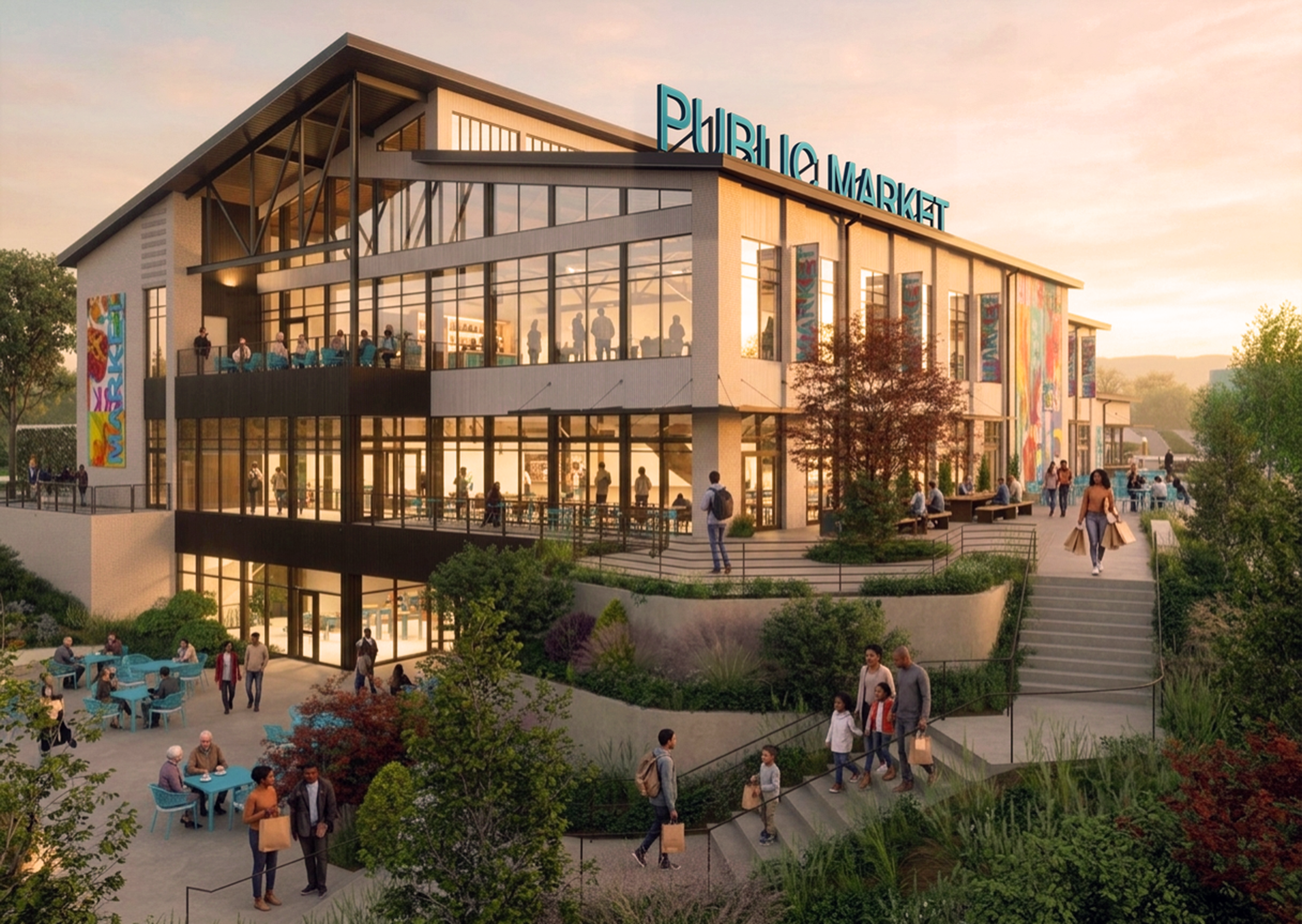
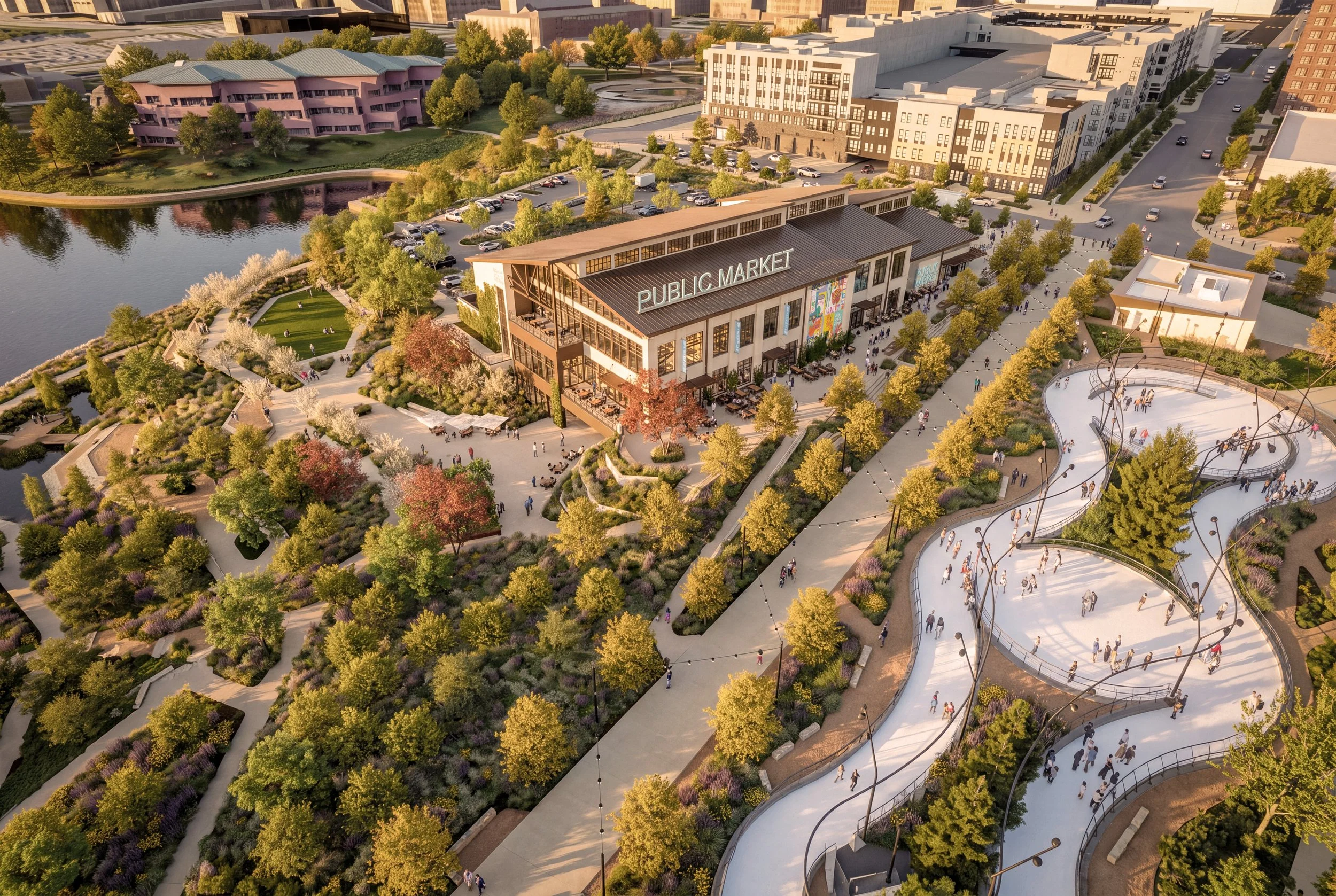
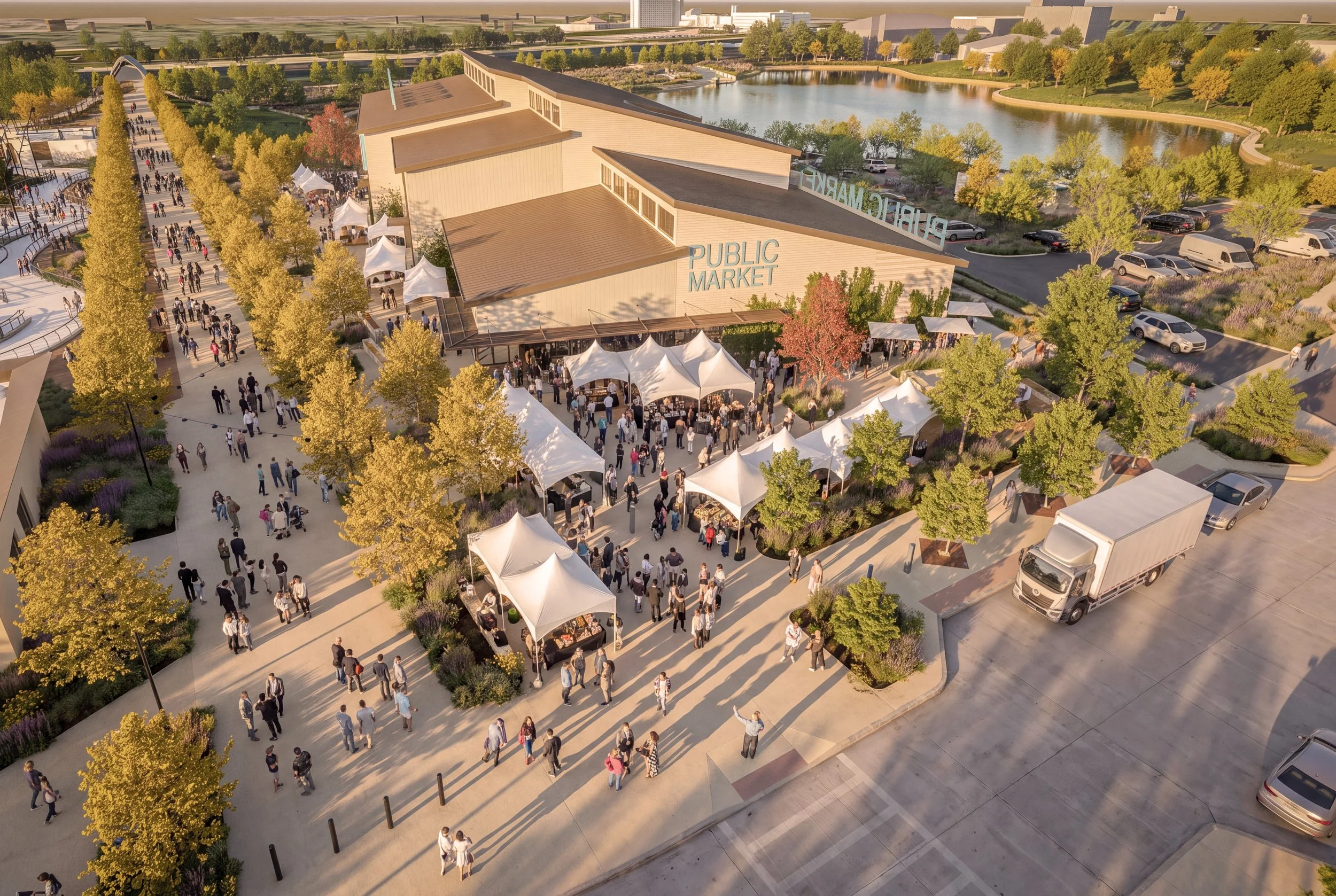
The market will be located in a three-story, 50,000-square-foot building nestled into the hill overlooking The RiverFront’s Heartland of America Park. Outdoor seating and event areas will blend seamlessly into the building’s spacious interior, which features a market floor with room for dozens of vendors, flexible programming areas, rentable event spaces, a teaching kitchen, and plenty of seating.
Your Market. Your Voice.
Project for Public Spaces, a global leader in placemaking, is working with Heritage Omaha on market business planning, community engagement, and design considerations.
In summer 2025, the pair invited the public to share feedback about how a public market could best support the community through interactive workshops and surveys for both community members and aspiring vendors, including food entrepreneurs, farmers, and makers.
The feedback helped shape a market concept that feels uniquely ‘Omaha.’
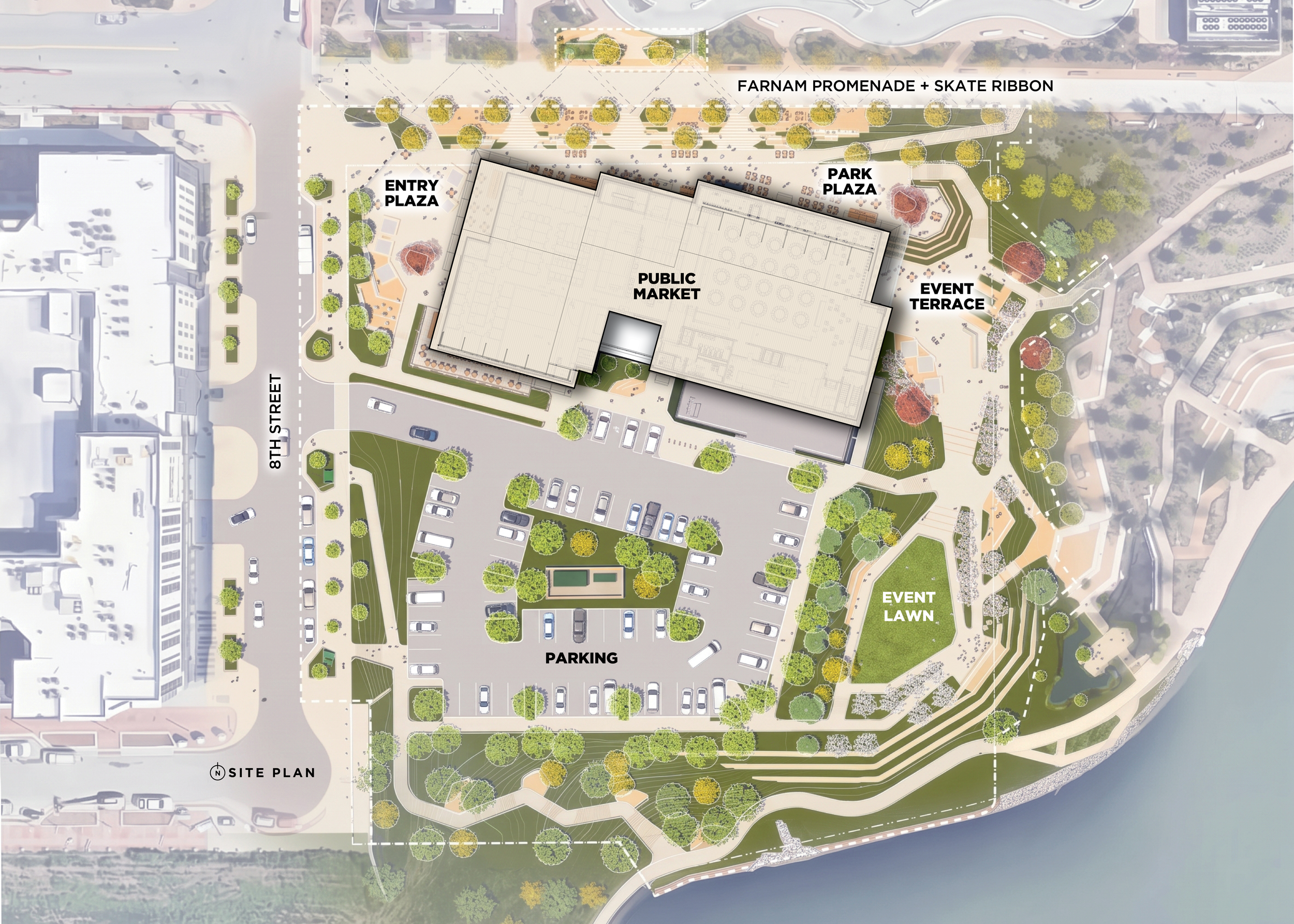
The public market is located at 8th and Farnam streets along The RiverFront’s Heartland of America Park, near the Skate Ribbon and the Farnam Promenade.
What is a Public Market?
A public market offers locally owned and operated businesses a central place to sell a variety of goods, including fresh and prepared foods. Public markets are set apart from other types of retail, such as grocery stores, by a few key criteria:
Having public goals, or clear and tangible ways they aim to benefit their local communities;
Operating in a public space, or creating a public space, so they provide inclusive places for the community to gather; and
Serving locally owned and operated businesses, which feeds money back into the local economy while creating low-risk opportunities for entrepreneurs and small businesses.
To learn more about public markets, please visit Project for Public Spaces’ website.
